The Impact of Electric Vehicles on Vehicle Restraint Systems – Urgent Need for Infrastructure Adaptation.
Introduction: The Challenge of Heavier Vehicles and Outdated Safety Infrastructure
The UK’s transition to electric vehicles (EVs) is accelerating, with a legally binding target to phase out new petrol and diesel vehicle sales by 2030. While this shift is a vital step towards reducing emissions and combating climate change, it introduces a critical and largely overlooked issue: whether our existing Vehicle Restraint Systems (VRS) are capable of safely containing and redirecting heavier, battery-laden vehicles in collisions.
Most VRS across the UK road network were designed and installed before the widespread adoption of EVs. Many of these systems adhere to EN 1317 standards, which were originally formulated for vehicles up to 1.5 tonnes. However, modern EVs routinely exceed this weight threshold, raising serious concerns about whether the UK’s safety barriers, parapets, and crash containment structures are fit for purpose.
We at SSR Limited are calling for the VRMA to push for urgent research, funding, and policy updates to ensure our national safety infrastructure is capable of withstanding the unique impact dynamics of EVs. The failure to address this issue in RIS3 (2025–2030) could lead to preventable fatalities, more severe accidents, and legal liabilities for governing authorities.
EV Weight and Its Effect on Crash Barriers
The increased weight of EVs is primarily due to their lithium-ion battery packs, which are significantly heavier than traditional combustion engine components. This results in:
- Increased Kinetic Energy in Collisions: A heavier vehicle moving at the same speed as a lighter vehicle carries more kinetic energy, increasing the force exerted on safety barriers upon impact.
- Higher Risk of Barrier Breach: Research suggests that barriers designed for lighter vehicles may fail when confronted with EVs, allowing vehicles to penetrate or topple over containment structures.
- Altered Impact Dynamics: The weight distribution of EVs differs from internal combustion engine vehicles. The large, low-mounted battery packs shift impact forces differently, potentially reducing the effectiveness of existing crash barrier designs.
The UK’s current road safety infrastructure does not sufficiently account for these new risks, creating an urgent need for reassessment and adaptation.
National Highways’ Response: Research Delays and Lack of Action
Recognising the potential risks, National Highways commissioned a £30,000 research study with the Transport Research Laboratory (TRL) in 2023 to assess the impact of heavier EVs on crash barriers. However, as of early 2025, the findings remain unpublished, and no clear action plan has been presented. The lack of immediate response to these concerns leaves the UK’s road network vulnerable to safety failures.
Furthermore, despite industry discussions highlighting the risks of outdated containment standards, no new EN 1317 guidelines specific to EV weight classifications have been implemented in the UK. Without regulatory adjustments, legacy barriers that are already failing under current traffic conditions will be even less effective as EV adoption increases.
Real-World Incidents Underscoring the Risk
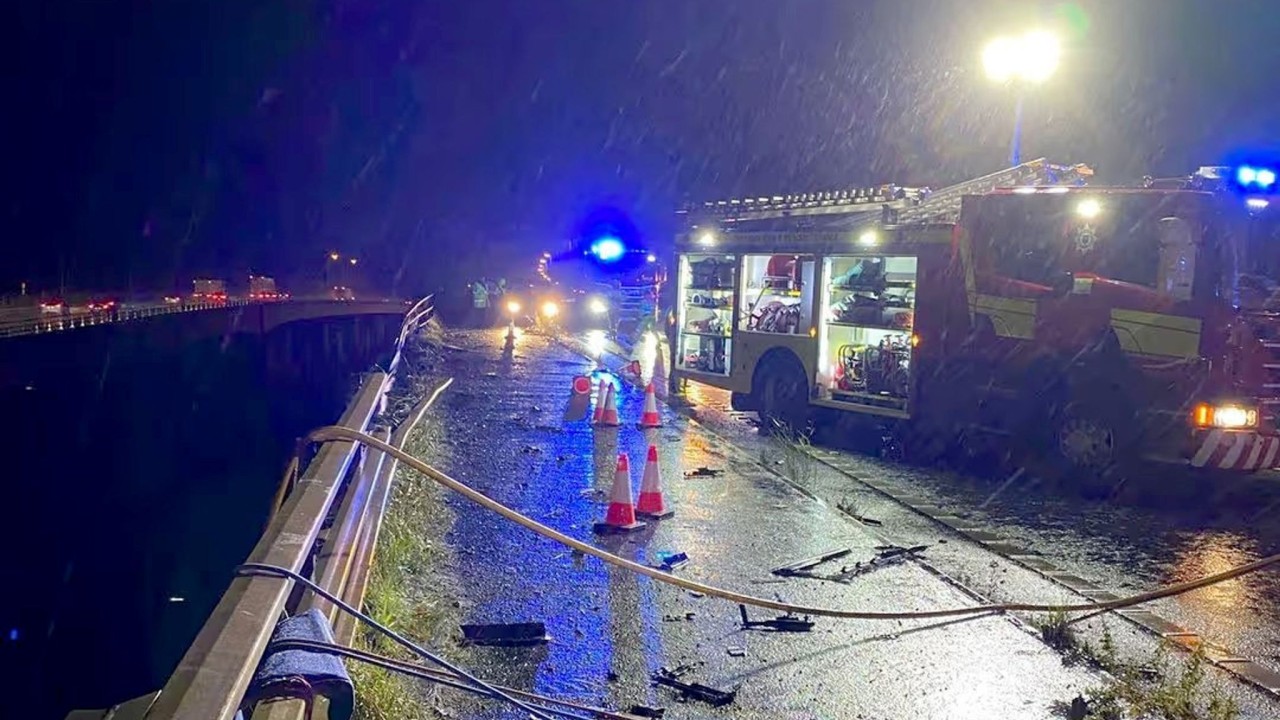
Recent accidents suggest that existing barriers may already be failing to contain heavier vehicles, potentially exacerbating road safety risks as EV usage rises:
- M6 Thelwall Viaduct (2024): A lorry breached safety barriers and fell 60 metres off the viaduct, illustrating containment system weaknesses on major bridge structures.
- A1(M) Crash (2024): A lorry crashed through the central reservation, resulting in multiple fatalities. The barrier’s inability to restrain the vehicle raises concerns about high-speed containment systems.
- M3 Bridge Collision (2024): A man died when his car collided with a concrete barrier and fell onto the M3 below, demonstrating the limitations of outdated parapet designs.
With EVs set to comprise an increasing share of UK road traffic, the likelihood of similar incidents escalating in severity will rise unless infrastructure is updated accordingly.
Comparing UK Road Safety Efforts to International Best Practices
Other countries have begun recognising the risks associated with heavier vehicles and implementing proactive measures:
- United States: The Federal Highway Administration (FHWA) has initiated studies on the impact of EVs on road safety infrastructure, including barrier strength and roadside object collisions.
- Germany: The German Institute for Standardisation (DIN) is considering updates to national barrier requirements to account for vehicle weight changes.
- Sweden: Transport authorities are testing adaptive crash barriers that adjust their rigidity based on impact force, addressing concerns over vehicle weight variation.
The UK must follow suit by updating national safety standards and ensuring that barriers across all road networks are suitable for EV containment.
A Call to Action: Key Measures for RIS3 and Beyond
As RIS3 is finalised, we at SSR Limited urge the VRMA to advocate for the following essential measures:
- Comprehensive EV Crash Testing for VRS: National Highways and the Department for Transport must conduct large-scale crash tests to determine whether existing barriers meet the needs of heavier vehicles.
- Revised VRS Standards to Account for EV Weight: EN 1317 regulations should be updated to introduce new containment levels for vehicles exceeding 2 tonnes.
- Dedicated RIS3 Funding for Barrier Upgrades: RIS3 must allocate at least £50–100 million annually to replacing outdated barriers with higher-rated containment systems designed for modern vehicles.
- Prioritisation of High-Risk Areas: Bridges, high-speed roads, and accident-prone sections should undergo immediate assessment to determine the necessity of VRS upgrades.
- Regular Inspection and Maintenance Program: National Highways must establish a mandatory audit cycle to evaluate the effectiveness of VRS in real-world conditions.
- Immediate Publication of Research Findings: The results of the TRL study on EV impact must be made public, allowing industry experts to provide input on necessary safety adaptations.
Time is Running Out
The UK is at a crossroads. The transition to EVs is happening faster than our safety infrastructure is adapting. Without immediate action, we risk seeing more severe accidents and preventable fatalities as outdated barriers fail to contain heavier, more forceful EV impacts.
We at SSR Limited are calling for the VRMA to take the lead in pushing the Department for Transport, National Highways, and policymakers to recognise this growing risk and implement urgent safety upgrades. The time for discussion is over—without intervention, the next EV-related barrier failure could result in a preventable tragedy.
Contact: technical@ssrlimited.co.uk