
The UK’s Outdated Containment Levels: A Systemic Failure in Road Safety.
Introduction: A Safety System That Hasn't Kept Pace
For decades, the UK has relied on containment standards for road safety barriers and parapets that no longer reflect the reality of modern vehicles. While advances in central reservation barriers have seen a transition towards higher containment concrete barriers, largely due to Britpave’s years long effort in highlighting the risks of vehicle crossovers, regrettably bridge parapets and roadside barriers remain dangerously outdated.
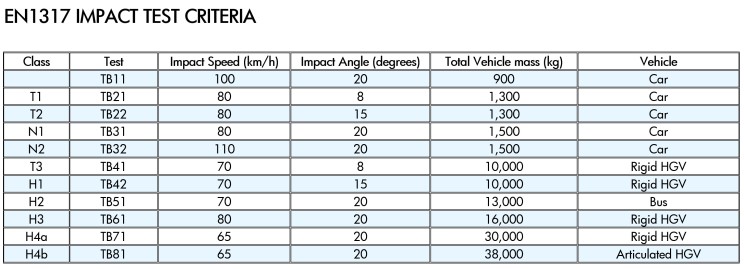
The vast majority of vehicle restraint systems (VRS) in the UK were tested and installed under containment assumptions set in BS 6779 and EN 1317, which define an N2 containment level, tested with a 1,500kg vehicle at specified speeds and impact angles. But today’s vehicles are significantly heavier.
The rapid adoption of electric vehicles (EVs), along with the long-standing increase in SUVs, vans, and HGV traffic, means that many of our roadside and bridge barriers may no longer be capable of safely containing these vehicles in a crash.
Yet, unlike central reservation barriers, which have been systematically upgraded, there is no structured programme to reassess and upgrade outdated parapets and roadside barriers, even in high-risk areas like bridges, viaducts, and motorways.
If central reservation barriers have been upgraded to prevent crossover accidents, why hasn’t the same urgency been applied to parapets and other containment structures?
The Containment Problem: Are Our Barriers Fit for Purpose?
- The majority of UK parapets and safety barriers were installed under the lowest containment classification (N2).
- N2 containment was designed for a 1,500kg saloon car, yet many modern vehicles—including SUVs and EVs—weigh between 1,800kg and 2,500kg.
- Despite this, there has been no nationwide policy to transition to H2 or H3 containment levels for roadside barriers and bridge parapets, despite clear evidence that many vehicles now exceed the loads these systems were originally designed to withstand.
This problem has been raised by industry professionals before. A recent comment from a senior figure in the UK and International road safety sector put it bluntly:
"The vast majority of UK parapet railing systems were tested at N2 containment level under BS6779 or EN1317. That's a parapet only capable of containing a 1,500kg saloon car. It was a mistake at construction stage and is now a bigger issue with the increased weights of EVs and SUVs. The use of N2 containment on a bridge is madness in the first instance. At minimum, H2 or maybe H3 should be adopted."
This isn't a new revelation but it remains an unaddressed issue that puts lives at risk every day.
The Central Reservation Example: A Model for Upgrading Containment
Concrete central barriers on the Strategic Road Network (SRN) have been systematically upgraded to higher containment levels following serious cross-over incidents. Britpave played a major role in lobbying for these improvements, highlighting the limitations of steel barriers in containing heavier vehicles at high speed.
The same logic should now be applied to parapets and roadside barriers, particularly:
- Bridges over high-risk infrastructure (railways, busy motorways, deep embankments).
- High-speed roads where the kinetic energy of a crash is significantly higher.
- Areas with high HGV, EV, and SUV traffic, where heavier vehicle impacts are more likely.
National Highways has already acknowledged that standard steel central barriers do not provide sufficient containment in many cases, hence the shift to concrete (coupled with a cost saving over the lifespan of the system). Yet bridge parapets and roadside barriers remain largely ignored, despite being just as critical in preventing catastrophic incidents.
A Forgotten Weak Link: The Role of Barrier Anchors
Even if containment levels were increased, another major weakness remains unaddressed: the anchorages securing these barriers in place.
- Many older barriers are simply bolted onto original, decades-old anchors.
- These anchors were never designed for modern containment loads, and in many cases, their material integrity is unverified.
- Bi-metallic corrosion occurs when new stainless steel barriers are mounted to aging carbon steel anchors, a problem well-known in Series 400 specifications but ignored in practice when barriers are "upgraded" without replacing the fixings.
Unless anchoring systems are assessed and modernized, even increasing containment levels may not guarantee safety, as the barrier itself may hold while the fixing points fail.
The EV Factor: The Urgency to Act
The issue of outdated containment is not just about EVs, but they have amplified the problem.
- EVs weigh 20-50% more than their petrol and diesel counterparts.
- Heavier vehicles generate significantly higher impact forces at the same speed.
- Battery positioning in EVs alters impact dynamics, potentially increasing the risk of barriers being breached, rather than safely redirecting the vehicle.
- Despite this, there has been no national crash testing programme to assess how existing barriers perform against these forces.
National Highways commissioned a £30,000 study in 2023 on the impact of EV weight on crash barriers but the findings have yet to be released, leaving serious questions unanswered.
A Call for Action: What Needs to Happen Now
It is not enough to acknowledge that containment levels are outdated, National Highways and the Department for Transport should now commit to:
- A full-scale review of containment classifications on the Strategic Road Network to determine where barriers and parapets need to be upgraded from N2 to H2 or H3 containment.
- A dedicated programme to assess and replace aging anchors, ensuring that new barriers are not simply bolted onto old, corroded, and structurally compromised fixings.
- The immediate release of the 2023 EV crash barrier study, allowing the industry to make informed safety improvements rather than waiting for a serious failure to trigger action.
- An alignment of parapet safety with the approach taken on central reservation barriers, ensuring that containment upgrades aren't limited to motorway medians but extend to all high-risk areas.
The UK has already upgraded its central reservation barriers based on clear evidence of risk. It’s time to apply the same logic to bridge parapets and roadside barriers before a catastrophic containment failure forces a reactionary response.
Conclusion: Safety Upgrades Cannot Be Delayed
The evidence is clear:
- The majority of UK parapets and roadside barriers were installed to outdated containment standards.
- The increased weight of modern vehicles, especially EVs, further pushes containment beyond safe limits.
- Fixings and anchors are not being systematically assessed, creating additional points of failure.
- Britpave successfully lobbied for better containment levels on central reservations—now we should do the same for roadside and bridge safety barriers.
If nothing changes, the UK will be caught off-guard when containment failures occur.
The question now is simple: Do we act before a disaster happens, or after?
🚧 The time for containment upgrades is now. 🚧
Contact: technical@ssrlimited.co.uk